
Muse, the OTAs, and the Many Doors to a Booking
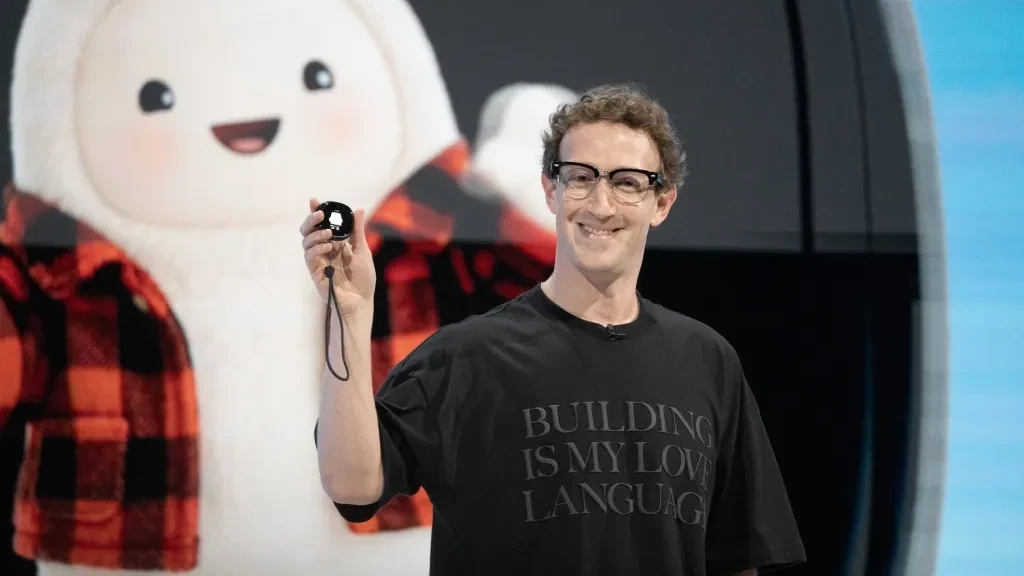
Booking, Expedia and Airbnb lost about $54B of market value in the two weeks after Meta shipped Muse. Thomas Reiner of Platform Aeronaut wrote the clearest piece on it. His read: the market got the direction right and the mechanism wrong. “Muse is a distribution shock priced as a supply shock.”
Here is what he means, what it means for anyone who sells a stay, and what to build next.
The commission was never for the search box
On a $1,000 hotel booking, Booking earns $145 and keeps $53 of EBITDA. Reiner: “Nobody’s moat was ever the search box. It was supply aggregation and contracts/payment rails/rebooking.” Booking takes the payment on 73% of its volume. It eats the fraud and it answers the phone.
An agent like Muse replaces the search box. It does not replace the payment, the fraud, or the phone. Someone still does that work on every booking an agent makes. That is why the scenario the market is pricing, where the agent books direct with the property, “doesn’t require Meta to become an OTA. It just requires hotels to become bookable, and that clock is already running.”
What AI-bookable means
It does not mean “an agent can book you.” Muse has a browser. It can click through a calendar widget, log in, and read the confirmation email. It is tireless in a way no human shopper is.
AI-bookable means booking you is cheap, fast and permitted, and your terms are legible enough to compare. An agent choosing among sixty managers in a market can query sixty structured endpoints in one pass, or drive sixty browser sessions that may hit a captcha halfway. It can read a cleaning fee and a cancellation policy from a schema, or discover them at step four of a form.
Plaid is the precedent. It started by screen-scraping bank logins, and it worked. Banks built APIs anyway, because scraping was fragile and the liability was ugly. Agents will book anything. They default to whatever costs them least, and they compare only what they can read.
Lots of doors
On September 21 Amazon blocked Muse. On September 22 Expedia, Instacart, Shopify and PayPal all shipped Muse connectors. Muse can act on the web without anyone’s permission, and Reiner says that is “exactly why Amazon slammed the door shut and why Expedia decided they’d rather offer a clean API.”
Expedia will not be the last. Every place a stay is sold will build a door for agents: the OTAs, the PMS platforms, and the property’s own site. The same room will be reachable through several of them at once, and agents will use whichever door is open, clear, and cheapest to get through.
Not all of those doors will be the property’s own, and that is fine. The same thing that favors a small hotel over an OTA favors a differentiated channel over an aggregator. Aggregating the whole market was a human value proposition: one place to look, because a person cannot look everywhere. An agent can. “We have everything” stops being a reason to route through you. “We have something nobody else has” is still a really good reason to route through you. A channel that differentiates in supply or guest/agent experience gets chosen, so long as it is operable and priced right.
Serving the swarm
Another thing we’ve been thinking about is Paul Graham’s tweet, quoting Nikita Bier on what agent traffic does to a website:
This is a big enough problem that there's not just one startup idea here, but several. For example, there will probably be one variant meant to filter out agents, but another meant to welcome them in an orderly way. This also seems an idea you could build more on. https://t.co/XlNf2WvskK
— Paul Graham (@paulg) September 24, 2026
Bier’s point is that agent swarms will suffocate every website and form, and that small companies are the most exposed. PG’s is that this is more than one company: one kind will filter agents out, and another will welcome them in an orderly way.
A seller of stays cannot filter. An agent shopping for a room is working for a guest who wants to book, and turning the agent away turns the guest away. But a booking engine built for one human at a time cannot serve a swarm either. Sixty agents checking the same dates for sixty guests is a normal Tuesday in the agent era, and it looks like a denial-of-service attack to a calendar widget.
Serving that traffic in an orderly way is infrastructure: an endpoint that answers in milliseconds instead of a page that loads, a way to know which agent is asking and for whom, a checkout that completes without a browser, and rate limits and identity controls that keep a swarm from taking the site down for the human guests. That is the door PG is describing. No independent hotel or property manager is going to build it alone, and it does not belong to any one channel.
Where the value goes
Reiner calls the agent the new landlord of the funnel. Expedia and Booking spend 4 to 6% of gross bookings on performance marketing, $8B for Booking alone in 2025, most of it with Google. Some of that rent moves to the agents.
What does not move is the work under the booking. As Reiner puts it: “An agent can connect to Marriott or Hyatt once, it cannot contract with, pay, and service millions of independents in 200 countries.” Somebody has to do that work for the independents, and it makes no sense to do it separately for each agent that ships. Whoever the agent is and whichever door it comes through, the seller’s name should be on the confirmation and the seller’s processor should take the money. That is plumbing, not a feature, and the sellers who have it will be reachable by every agent without rebuilding for each one.
Two things then matter for the seller. What you offer the guest: the rate, the cancellation terms, the perks, the relationship. Reiner expects that if agents route direct, “hotels will fund their own member rates,” and an agent can only weigh an offer it can read. And where you can be reached: guests plan in ChatGPT, Gemini, Claude and now Muse, book on their phones, and message on WhatsApp. The offer has to be bookable in each of those places, with the same identity, terms and payment following the guest from one to the next.
The conclusion
Agents are coming for the booking, and the market has already decided there will be new winners. It priced the OTAs down on that in two weeks. It has not decided who.
Reiner’s answer is the right one: whoever the guest’s agent can book. The guest has not changed. They still want the right house, a fair rate, clear terms, and someone who answers when the hot tub is cold. What changed is that the guest now sends an agent to get it. The seller who serves that guest well through the agent, on every door they sell through, wins the booking. The one who makes the agent work for it, or turns it away, loses it to whoever didn’t.
For twenty years that was a marketing problem: be found. It is now an engineering one: be bookable, be legible, be able to answer sixty agents at once. That is the clock Reiner says is running.
Kismet is booking infrastructure for the agent era.